HTTP Status Codes Explained in Plain English
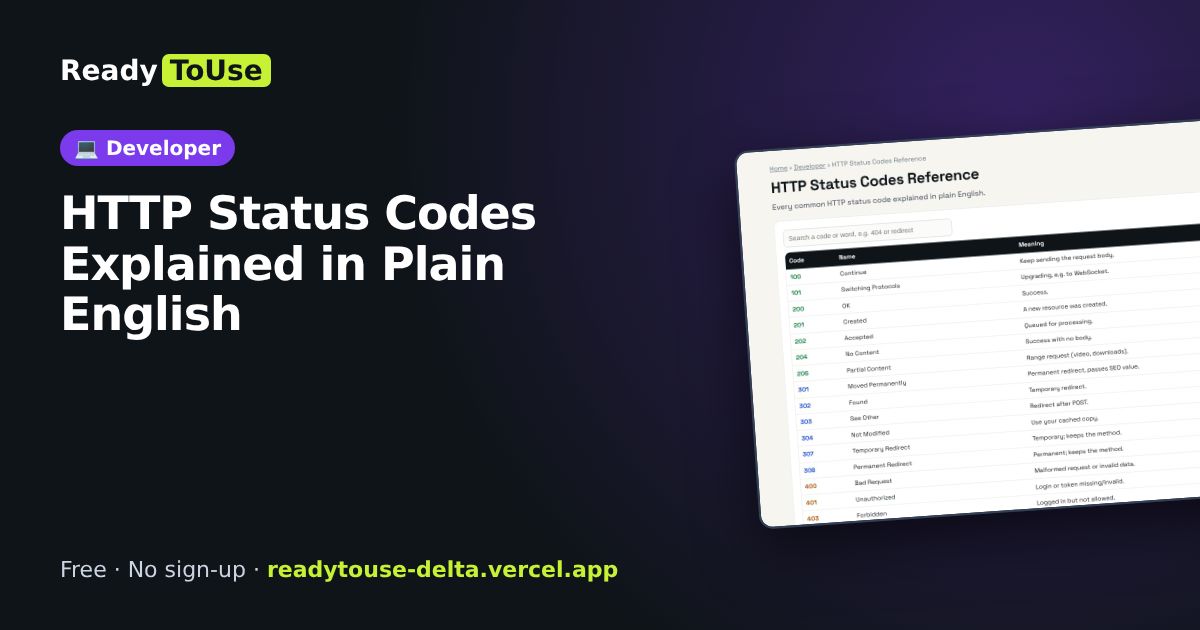
404, 301, 500, 429: what do they actually mean, and what should you do about them? A clear reference for every common HTTP status code.
Open the free HTTP Status Codes Reference →What is the HTTP Status Codes Reference?
Every common HTTP status code explained in plain English. It's completely free, needs no sign-up and works on any phone or computer.
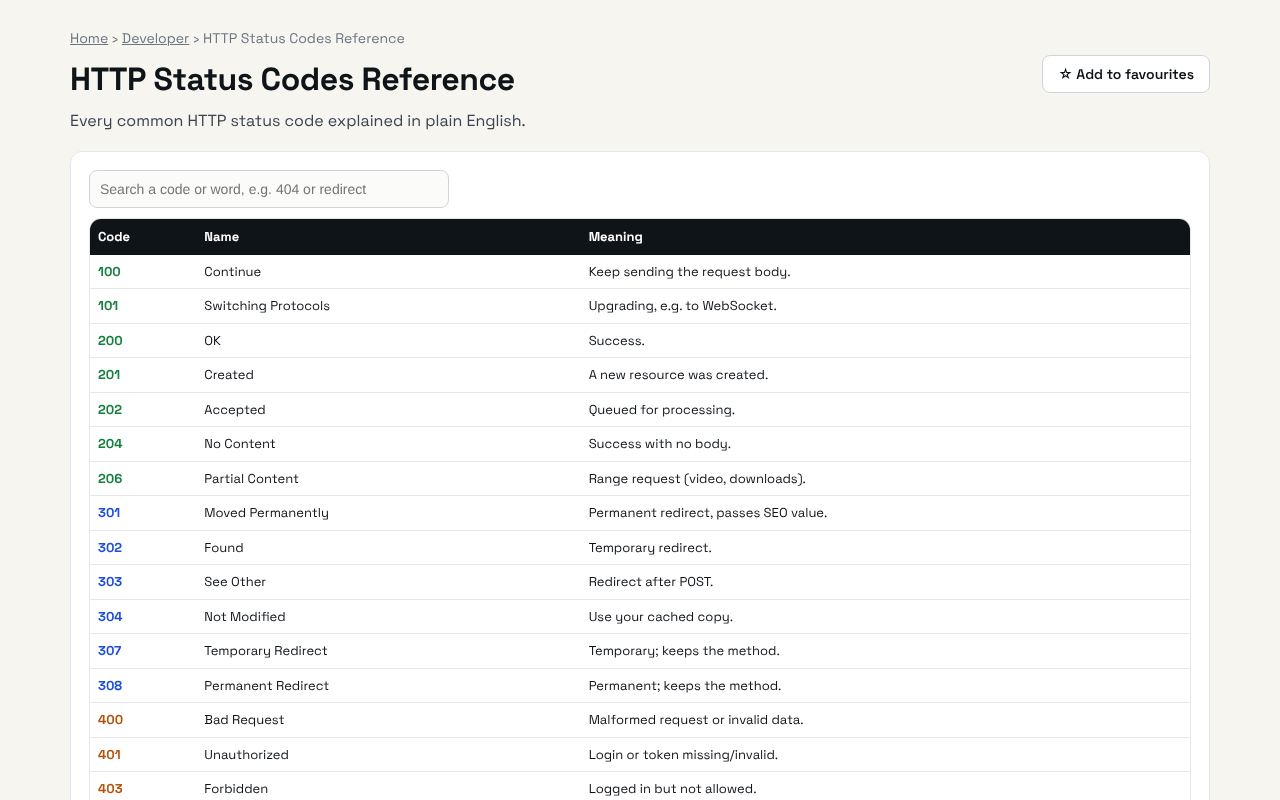
Why it's helpful
- Plain-English explanations
- Covers redirects, client and server errors
- Useful for SEO and debugging
Who it's for
Developers, SEO specialists and site owners.
How to use it
- Search by number or keyword.
💻 Open source: this tool is free and open source (MIT License). View the code on GitHub, download it and run it offline.
The bigger picture: Developer
Developers lose a surprising amount of time to small tasks: formatting data, decoding tokens, converting between formats and checking syntax. Fast in-browser tools keep you in flow and keep sensitive data off third-party servers.
What's changing: AI coding assistants now write a lot of code, but developers still need quick, trustworthy tools to inspect and verify what comes out: formatters, validators and decoders matter more, not less.
Frequently asked questions
301 or 302 for SEO?
Use 301 for permanent moves so search engines transfer ranking to the new URL.